Qigong for TBI Recovery
Gentle Movement • Nervous System Support • Mind–Body Healing
Recovery after traumatic brain injury is not only physical — it involves the nervous system, emotional regulation, and reconnecting with the body.
Our Qigong program is designed specifically with TBI survivors in mind. It offers slow, intentional movements and guided breathwork to support calm, balance, and internal awareness.
This is not about intensity.
It is about restoration.
What Is Qigong?
Qigong is an ancient mind–body practice that combines gentle movement, breath, and focused awareness. The movements are slow and adaptable, making them accessible for individuals experiencing fatigue, dizziness, cognitive challenges, or sensory sensitivity.
For those navigating TBI recovery, Qigong can offer:
Gentle nervous system regulation
Support for balance and coordination
Increased body awareness
Stress reduction
Emotional grounding
Improved focus and clarity
All movements can be done seated or standing and are adaptable to your comfort level.
Why Qigong for TBI?
After brain injury, the body and nervous system can feel overstimulated, fatigued, or disconnected.
Qigong supports recovery by:
Encouraging parasympathetic (rest-and-repair) activation
Promoting mindful pacing
Reducing overwhelm
Supporting energy management
Creating a safe, structured rhythm for healing
It meets you where you are.
No pressure.
No performance.
Just presence.
What to Expect in This Course
Each session includes:
Gentle guided warm-up movements
Breath-centered practices
Simple flowing sequences
Rest and integration time
Encouraging, trauma-informed instruction
Sessions are paced slowly, with options for breaks and modifications throughout.
This is a supportive environment where listening to your body is encouraged.
Who This Course Is For
Individuals recovering from TBI
Caregivers looking for supportive movement practices
Anyone experiencing nervous system dysregulation
Those seeking a gentle return to embodied movement
No prior experience is necessary.
Our Philosophy
Healing is not about forcing progress.
It is about creating conditions where the body feels safe enough to restore.
Brick by brick.
Breath by breath.
-
-
Lesson 1
Introduce your lesson with an optional, short summary. You can edit this excerpt in lesson settings.
Introduce your lesson with an optional, short summary. You can edit this excerpt in lesson settings.
-
Lesson 2
Introduce your lesson with an optional, short summary. You can edit this excerpt in lesson settings.
Introduce your lesson with an optional, short summary. You can edit this excerpt in lesson settings.
-
-
-
Lesson 1
Introduce your lesson with an optional, short summary. You can edit this excerpt in lesson settings.
Introduce your lesson with an optional, short summary. You can edit this excerpt in lesson settings.
-
Lesson 2
Introduce your lesson with an optional, short summary. You can edit this excerpt in lesson settings.
Introduce your lesson with an optional, short summary. You can edit this excerpt in lesson settings.
-
Meet Your Instructor
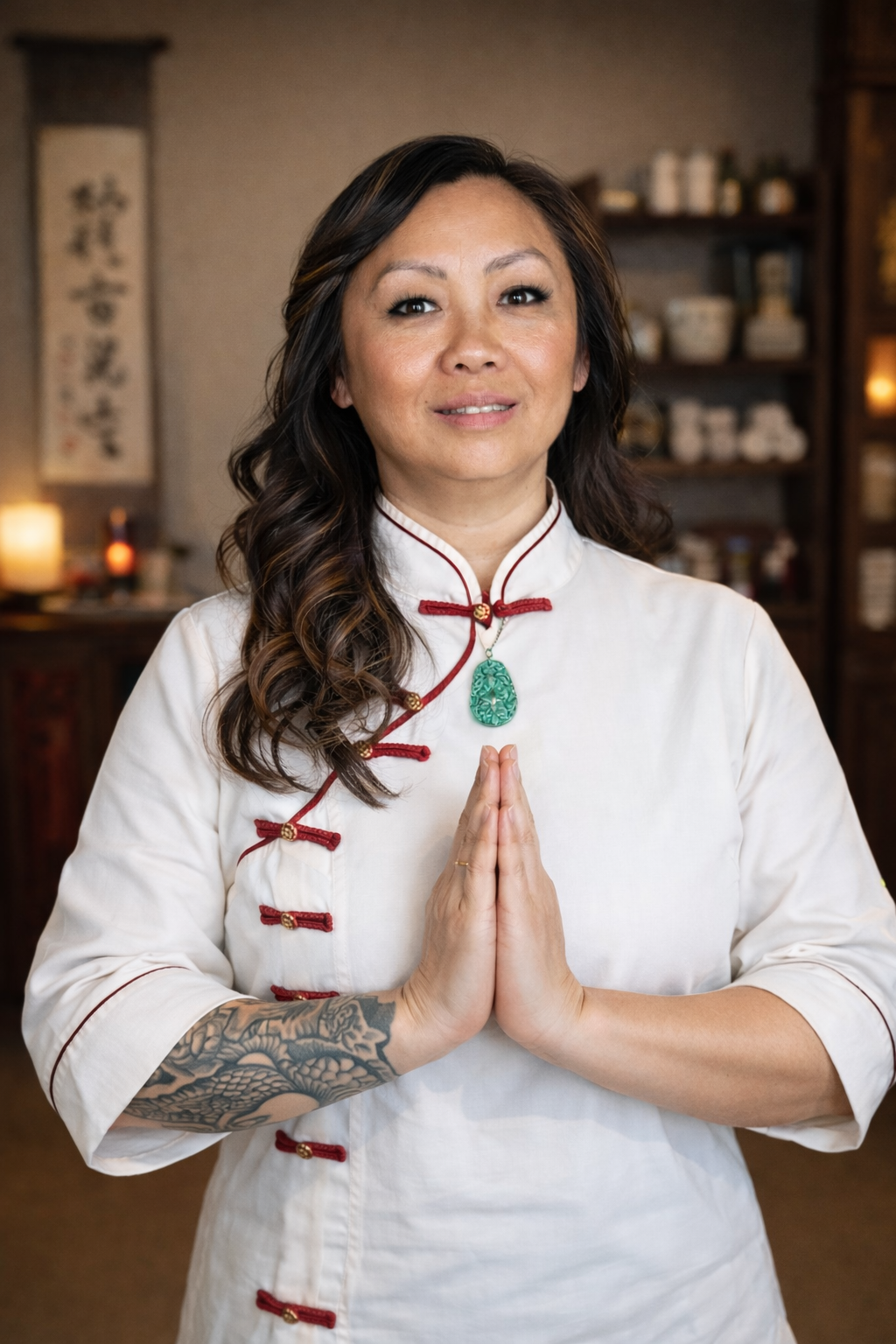
Phanomvan Pongdara, LMT, MMQ
Doctorate of Medical Qigong (in progress)
Phanomvan Pongdara brings over 15 years of experience in Traditional Chinese Medicine (TCM) and Classical Chinese Medicine (CCM) to her work in healing and rehabilitation.
As a Licensed Massage Therapist and Medical Qigong practitioner, her approach is rooted in the Eastern understanding that the body, mind, and spirit are deeply interconnected. Her work focuses on restoring balance, supporting the nervous system, and guiding the body back toward its natural state of regulation and strength.
But her work is not only professional — it is personal.
Two years ago, her son sustained a traumatic brain injury along with multiple serious injuries in a vehicle versus pedestrian accident. Through that life-altering experience, Phanomvan witnessed firsthand the physical, emotional, and neurological challenges that follow TBI.
She began incorporating the same Qigong breathing techniques, gentle movement practices, and Eastern healing principles into her son’s recovery journey — supporting nervous system regulation, energy restoration, balance, and emotional grounding.
What she teaches is not theory.
It is lived practice.
Her instruction is:
Trauma-informed
Gentle and adaptable
Rooted in Eastern medicine
Focused on nervous system support
Centered on patience and compassion
Phanomvan believes that healing is not about forcing progress. It is about creating safety in the body so recovery can unfold naturally.
Brick by brick.
Breath by breath.
She is honored to share this work with others navigating the path of recovery.